The Ankh: History, Symbolism, and Modern Spiritual Meaning
The Ancient Symbol of Life, Death, and Becoming
Few ancient symbols have endured quite like the ankh.
Recognizable by its looped top and cross like shape, the ankh has traveled through thousands of years of human history while continuing to hold spiritual, emotional, and symbolic power in the modern world. Often called “the key of life” or “the breath of life,” the ankh remains one of the most iconic symbols to emerge from ancient Egypt.
But its meaning extends far beyond aesthetics.
The ankh speaks to something deeply human:
life, transformation, survival, and the mysterious relationship between the physical and spiritual worlds.
The Origins of the Ankh
The ankh originated in ancient Egypt, where it appeared extensively in temple carvings, tomb paintings, jewelry, and sacred artwork. Historians believe the symbol dates back as far as the Early Dynastic Period, over 4,000 years ago.
In Egyptian hieroglyphics, the ankh literally represented the word “life.”
Gods and goddesses were often depicted holding ankhs in their hands or extending them toward pharaohs and humans. In many images, the ankh is shown near the mouth or nose, symbolizing the giving of breath, vitality, or divine life force.
It was not simply a decorative emblem.
It represented:
eternal life
spiritual vitality
immortality
divine protection
sacred connection between worlds
The ankh was deeply tied to the Egyptian understanding that life continued beyond physical death. To the ancient Egyptians, death was not viewed as an ending, but as a transition into another state of existence.
Because of this, the symbol frequently appeared in burial chambers and funerary objects, meant to guide and protect the soul in the afterlife.
What Does the Shape Mean?
The exact origin of the ankh’s shape is still debated among historians and archaeologists. Over time, many interpretations have emerged.
Some believe the loop and cross symbolize:
the union of masculine and feminine energies
heaven and earth
the rising sun
fertility and creation
the balance between physical and spiritual existence
Others associate the shape with sandals, the Nile River, or ritual knots used in Egyptian ceremonies. But regardless of its exact origin, the symbol consistently carried themes of continuity, life force, and sacred balance.
The Ankh in Ancient Egyptian Spirituality
The ankh was closely connected to several Egyptian deities, particularly:
Isis
Osiris
Ra
These Gods represented cycles of death and rebirth, fertility, healing, magic, and divine order. Because of this, the ankh became more than a symbol of simply “living.” It represented sacred existence itself. The idea that life was spiritually meaningful and eternally connected.
The ancient Egyptians understood life as cyclical rather than linear. Birth, death, rebirth, transformation. These are all part of something much bigger than we can see. And moving in a cyclical way. That worldview is part of why the ankh still resonates so strongly today.
Modern Interpretations of the Ankh
In modern spiritual communities, the ankh has evolved into a symbol of:
spiritual awakening
protection
resilience
feminine power
ancestral connection
sacred transformation
Many people are drawn to it because it represents surviving change while remaining spiritually connected to oneself.
For some, the ankh symbolizes reclaiming personal power after grief or hardship. For others, it represents:
the continuity of the soul
honouring ancient wisdom
connection to divine feminine energy
remembering that transformation is part of life itself
Its meaning has also expanded artistically and culturally through fashion, jewelry, tattooing, gothic aesthetics, alternative spirituality, and contemporary witchcraft spaces.
But even in these modern interpretations, the emotional core of the symbol remains remarkably similar to its ancient origins which is life continuing through transformation.
Why the Ankh Still Feels So Powerful?
Certain symbols survive because they continue speaking to universal experiences.
The ankh endures because it touches something timeless. This is the human desire to understand life, death, memory, grief, and what exists beyond visible reality. It reminds us that transformation is not failure. That becoming someone new often requires surviving the death of older versions of ourselves. And that there can still be sacredness in longing, grief, healing, and rebirth.
Final Thoughts
The ankh is more than an ancient symbol. It is a reminder that life is not static. It changes, evolves, breaks apart. and rebuilds itself. And sometimes the most sacred thing we can do is continue becoming. That is despite everything that tried to stop us.
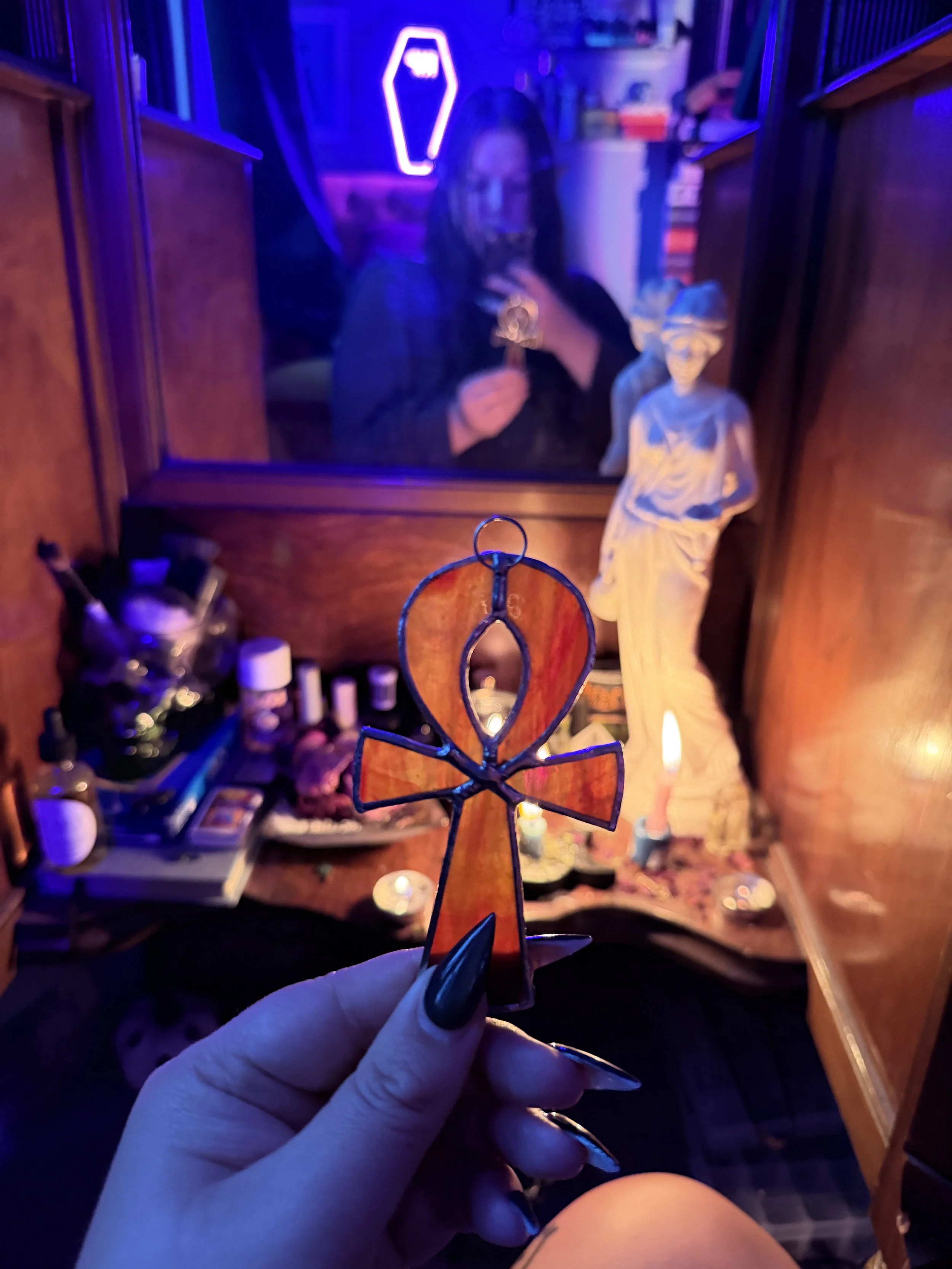
Feeling called to share about the ankh as I have always been drawn to ancient Egypt and the symbol itself. But also because I recently purchased a stained glass Ankh symbol from Karina Stained Glass Art at the Wicked Bazaar Bloom in the Dark market. This is what is photographed.